
Paslode vs DeWalt Nail Guns: Which One Should You Choose?
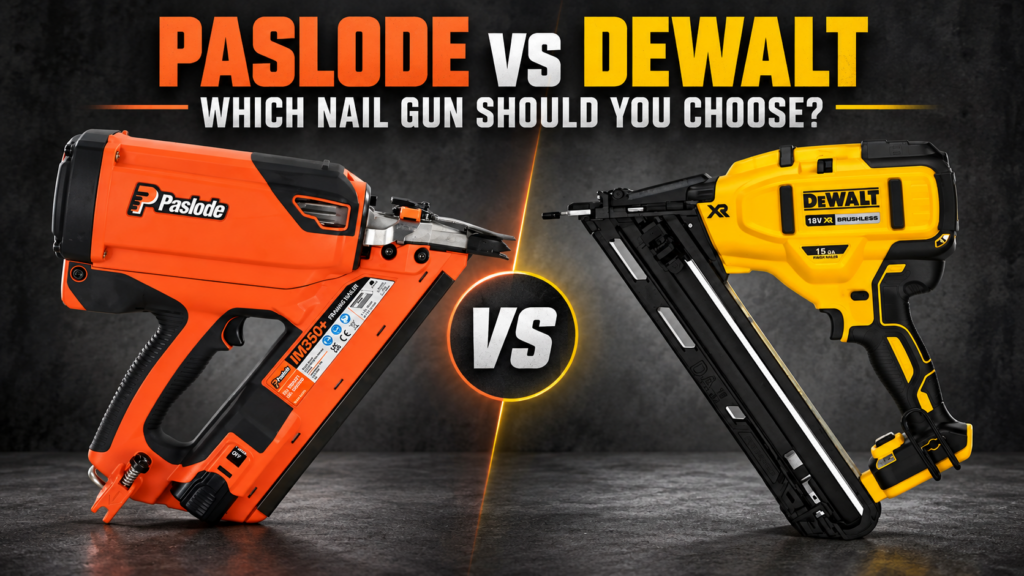
Paslode and DeWalt are two of the most recognisable names in professional nail guns. Both are widely used across UK building sites, particularly by carpenters, joiners, roofers, and general construction trades.
The right nail gun can save a huge amount of time compared with fixing nails manually, but Paslode and DeWalt take different approaches to cordless nailing.
If you are deciding between the two, this guide looks at their power systems, performance, weight, battery setup, running costs, and the type of work each brand is better suited to.
How Paslode and DeWalt Nail Guns Differ
The main difference is the way the tools generate the force needed to drive a nail.
Many Paslode cordless nail guns combine a rechargeable battery with a gas fuel cell. The battery operates the electrical components, while the fuel cell provides the combustion needed to fire the nail.
DeWalt cordless nail guns use battery power without requiring a separate gas cartridge. Models within the 18V XR range can use compatible DeWalt XR batteries, which may be particularly useful if you already own other DeWalt cordless tools.
Both systems remove the need for an air compressor and hose, making them practical for site work.
Power and Nail Driving Performance
Paslode has built much of its reputation around professional first-fix nailers.
Its battery and gas system can provide strong driving performance for applications such as timber framing, roofing, stud work, fencing, and other demanding jobs.
For tradespeople regularly fixing into heavier timber, this consistent firing power is one reason Paslode remains popular.
DeWalt cordless nail guns use a different system. Their battery-powered mechanism removes the need for gas while still providing enough performance for a wide range of construction and woodworking jobs.
For demanding first-fix work where driving performance is the main consideration, Paslode remains a strong option.
Fuel Costs and Day-to-Day Use
Running costs are an important difference between the two brands.
A Paslode nailer requires both a charged battery and suitable fuel cells. This means you need to keep an eye on your fuel supply as well as your batteries.
DeWalt removes the fuel-cell requirement completely.
Charge the battery, fit your nails, and the tool is ready for work. This can make stock management simpler, particularly for tradespeople using their nail gun regularly.
Over time, avoiding replacement gas cartridges may also reduce the ongoing cost of using the tool.
If you want fewer consumables to purchase and carry, DeWalt has a clear advantage.
Battery Compatibility
DeWalt’s 18V XR range is a major selling point for anyone who already uses DeWalt tools.
A compatible battery can often be moved between drills, impact drivers, saws, grinders, nailers, and many other tools in the XR range.
This means a tradesperson who already owns several DeWalt batteries may be able to purchase a nail gun as a bare unit without investing in another complete battery setup.
Paslode uses its own batteries designed for compatible Paslode tools.
They are typically compact and help keep the overall nailer manageable, but they do not offer the same broad battery compatibility found across DeWalt’s XR tool range.
Weight and Handling
A nail gun may be used hundreds of times during a working day, so weight matters.
Paslode nailers are well known for their balance and relatively manageable design. This can make a noticeable difference when working overhead, framing walls, or carrying the tool around a site for long periods.
DeWalt nail guns can carry additional weight because the battery-powered firing mechanism has to generate the required driving force without gas.
The actual difference varies between models, battery sizes, and nailer types, so it is worth checking the specifications of the exact tools you are considering.
For users who place a high priority on low weight and easy handling, Paslode may be preferable.
Maintenance and Reliability
Both manufacturers have a strong presence in the professional tool market, but the maintenance requirements differ.
Paslode’s combustion system means regular cleaning and correct servicing can be important for keeping the nailer operating properly. Fuel condition, battery charge, and general cleanliness can all affect performance.
DeWalt’s battery-only design removes the fuel system from the equation. This can simplify routine ownership, although the tool still needs normal cleaning, inspection, and maintenance.
Whichever brand you choose, looking after the nailer properly will help maintain reliable firing and reduce unnecessary wear.
Which Is Better for First-Fix Work?
Paslode is particularly well established for first-fix jobs.
Carpenters and builders commonly use first-fix nail guns for work including:
Timber framing
Roof construction
Stud walls
Floor joists
Fencing
General structural timber work
For jobs where you expect to drive a large number of substantial nails into timber, Paslode’s combination of manageable weight and strong firing performance makes it an appealing choice.
DeWalt also produces capable first-fix nailers, particularly for users who prefer a completely battery-powered setup.
Which Is More Convenient?
For straightforward cordless operation, DeWalt has an important advantage.
There is no separate fuel cell to buy, store, or replace. If you already have charged compatible XR batteries, you can swap batteries between tools as required.
Paslode requires slightly more preparation because both battery charge and fuel need to be considered.
However, many professional users accept this in return for the characteristics of Paslode’s gas-powered firing system.
Paslode or DeWalt: Which Should You Buy?
Your decision should depend on the work you carry out and the cordless tools you already own.
Paslode may suit you if you regularly carry out demanding first-fix work, want a relatively light and well-balanced nailer, and are comfortable buying fuel cells.
DeWalt may make more sense if you already own 18V XR batteries, want to avoid gas cartridges, prefer a battery-only nail gun, or want to keep ongoing consumable costs down.
Neither brand is automatically the right choice for every tradesperson.
A carpenter carrying out framing work every day may have different priorities from someone who only needs a nailer occasionally. Your existing batteries, typical nail sizes, working environment, tool weight, and expected usage should all be considered before buying.
Buying a Used Nail Gun
A good-quality used nail gun can be a practical option if you do not want to pay the cost of a brand-new machine.
Before buying one, check the exact model number, battery condition, magazine, firing mechanism, safety contact, and general condition of the tool.
If possible, confirm that the nailer has been tested and is operating correctly.
With gas nailers, it is also worth considering whether the tool has been cleaned and maintained properly, as poor maintenance can affect firing performance.
Selling Your Paslode, DeWalt, or Other Power Tools
Have a Paslode or DeWalt nail gun sitting unused in your garage, workshop, or van?
SellToolsOnline buys used power tools from customers across the UK.
We buy individual tools as well as larger collections, including nail guns, drills, saws, breakers, grinders, and other professional equipment.
To receive an offer, send us clear photos of your tools along with the model numbers, condition, and details of any batteries, chargers, cases, or accessories included.
Once we have reviewed the information, we can provide you with an offer. Depending on the tools and location, insured postage or collection may be available.
Instead of leaving unwanted tools gathering dust, you can turn them into cash and free up space for equipment you actually use.