
Corded vs Cordless Power Tools: Which Is Right for You?
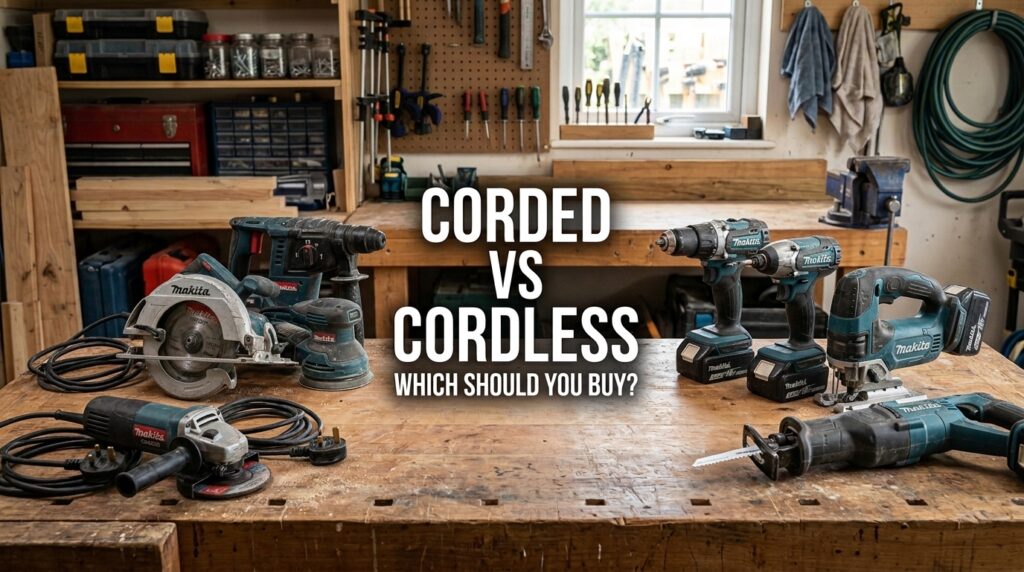
Choosing between corded and cordless power tools can affect how much you spend, where you can work, and how easily you complete your DIY projects.
Cordless tools have become a common choice for DIY users and tradespeople because modern batteries offer better runtime and power than older models. Corded tools still have advantages, especially for long jobs where continuous power matters.
So, which should you buy?
This guide compares corded and cordless power tools to help you choose the right option for your needs.
What Are Corded Power Tools?
Corded power tools connect directly to a mains electricity supply.
Common examples include:
Corded drills
Angle grinders
Circular saws
Sanders
Routers
Mitre saws
SDS drills
Demolition hammers
Because they receive continuous power from the mains, you do not need to stop working to recharge or replace batteries.
Advantages of Corded Power Tools
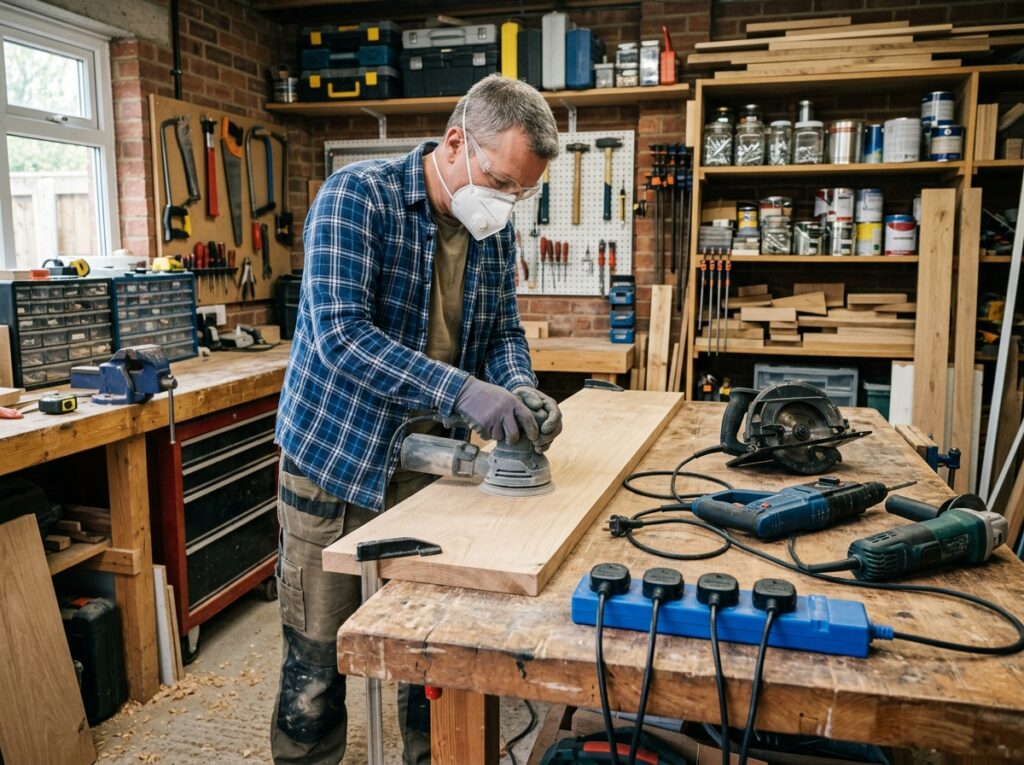
Continuous Power
A corded tool can run for long periods without battery changes or charging breaks.
This makes corded tools useful for extended jobs such as sanding floors, cutting large quantities of timber, mixing materials, or drilling concrete.
Lower Initial Cost
Corded tools are often cheaper to buy because you do not need batteries or chargers.
If you only need a tool occasionally, buying a corded model can save you money.
No Battery Replacement Costs
Power tool batteries wear over time and can be expensive to replace.
With a corded tool, you do not need to worry about battery condition, charging cycles, or buying additional batteries.
Suitable for Workshop Use
If you mainly work in a garage, shed, or workshop with easy access to sockets, the restrictions of a power cable may not be a major issue.
Disadvantages of Corded Power Tools
Limited Mobility
You need access to a suitable electrical socket.
Extension leads may be required when working outside or away from the mains supply.
Cables Can Get in the Way
Power cables can become inconvenient when working around ladders, timber, furniture, and other equipment.
You also need to take care to keep the cable away from blades and cutting areas.
Less Convenient for Quick Jobs
Setting up an extension lead for a small repair or five-minute drilling job can be inconvenient.
For quick tasks around the home, a cordless tool is usually easier to use.
What Are Cordless Power Tools?
Cordless power tools use rechargeable batteries instead of connecting directly to the mains supply.
Most modern cordless tools use lithium-ion batteries.
Popular UK power tool brands offer battery systems that allow one battery type to work across multiple compatible tools.
For example, an 18V battery may power your drill, impact driver, circular saw, jigsaw, sander, multi-tool, and garden equipment.
Compatibility depends on the manufacturer and battery platform.
Advantages of Cordless Power Tools
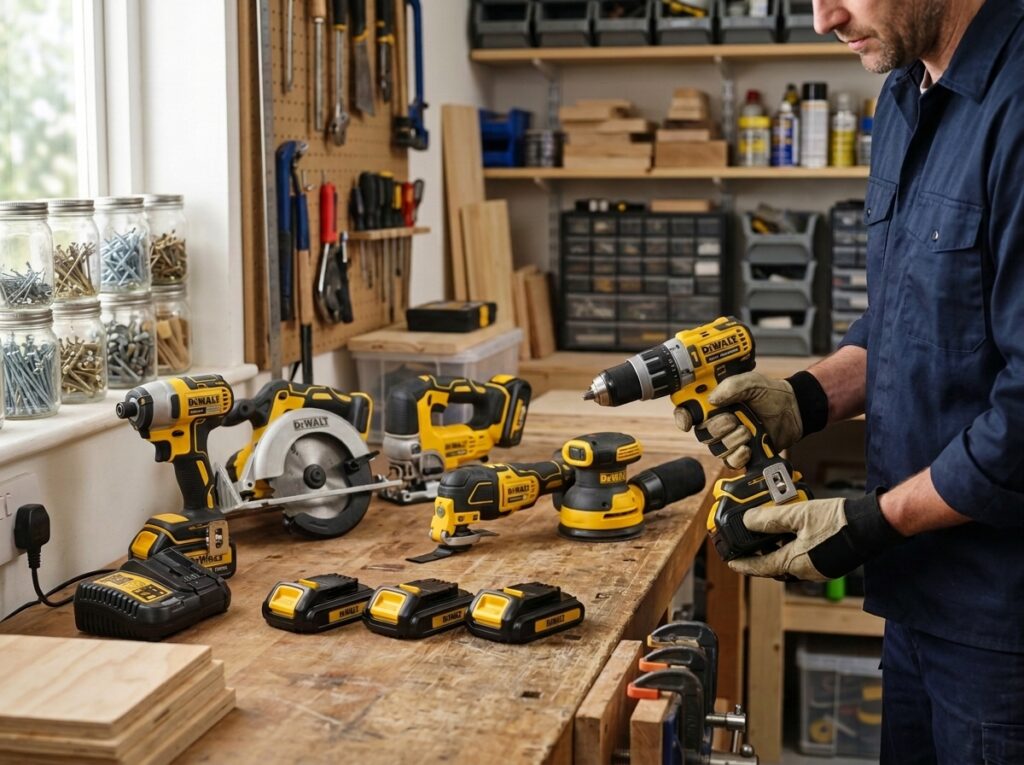
Easy to Carry and Use
You can work almost anywhere without searching for a socket or setting up extension leads.
This is useful when working outdoors, on ladders, inside vehicles, or around larger properties.
Ideal for Quick DIY Jobs
Insert the battery and start working.
For assembling furniture, drilling a few holes, repairing a fence, or cutting timber in the garden, cordless tools are convenient.
One Battery Can Power Multiple Tools
Buying into a battery platform can reduce the cost of expanding your tool collection.
Once you own compatible batteries and chargers, you can buy body-only tools instead of purchasing a complete kit every time.
Fewer Cables Around Your Workspace
Removing the power cable makes it easier to move around your work area.
It can also reduce cable-related trip hazards when tools are used correctly.
Disadvantages of Cordless Power Tools
Batteries Increase the Initial Cost
A cordless tool kit containing batteries and a charger usually costs more than a body-only tool.
Buying additional batteries can increase your total cost.
Limited Runtime
Every battery eventually needs charging.
Tools with high power demands, such as angle grinders, circular saws, and SDS drills, can use batteries quickly during heavy work.
Keeping additional charged batteries available can reduce interruptions.
Batteries Wear Out
Rechargeable batteries do not last forever.
Runtime and performance can decline as batteries age, especially if they are regularly exposed to excessive heat, poor storage conditions, or heavy use.
Battery Compatibility Can Limit Your Choices
Once you have invested in several batteries from one manufacturer, changing to another battery platform can become expensive.
You may need new batteries and chargers as well as new tools.
Corded vs Cordless Power Tools: Quick Comparison
| Feature | Corded Tools | Cordless Tools |
|---|---|---|
| Purchase Price | Usually lower | Usually higher with batteries |
| Mobility | Limited by cable length | Excellent |
| Runtime | Continuous | Limited by battery capacity |
| Maintenance Costs | No batteries to replace | Batteries may need replacing |
| Quick DIY Jobs | Less convenient | Very convenient |
| Workshop Use | Excellent | Excellent |
| Outdoor Work | Requires suitable power access | Excellent |
| Heavy Continuous Work | Excellent | Depends on tool and battery platform |
| Expanding Your Tool Collection | Each tool works independently | Body-only tools can save money within one battery system |
Are Cordless Tools Powerful Enough for DIY?
For most home improvement projects, yes.
Modern cordless drills, impact drivers, circular saws, jigsaws, sanders, and multi-tools can handle many common DIY jobs.
Battery voltage is not the only factor that determines performance.
Motor design, battery capacity, tool quality, and the demands of the job also matter.
For occasional drilling, furniture assembly, decorating, woodworking, and garden projects, cordless tools are often the more practical choice.
For long periods of cutting, grinding, sanding, drilling masonry, or other demanding work, a corded tool can still make more sense.
Which Tools Are Better Cordless?
Some power tools benefit more from portability than others.
Cordless drills and impact drivers are two of the clearest examples.
Other useful cordless tools include:
Multi-tools
Jigsaws
Reciprocating saws
Compact circular saws
Nail guns
Work lights
Vacuum cleaners
Hedge trimmers
Grass trimmers
These tools are often moved between different work areas, making cordless operation useful.
Which Tools Are Better Corded?
Corded tools can be a good choice when continuous runtime and lower purchase cost matter more than portability.
Examples include:
Mitre saws
Table saws
Large routers
Heavy demolition hammers
Bench grinders
High-powered sanders
Large angle grinders
The right choice still depends on how often you use the tool and where you work.
Should You Stick to One Battery Brand?
If you decide to buy cordless tools, choosing a battery platform carefully can save you money.
Brands such as Makita, DeWalt, Milwaukee, Bosch Professional, Ryobi, and Einhell offer ranges of tools that share compatible batteries within specific platforms.
Before buying, check:
How many tools are available on the battery platform.
The price of replacement batteries.
Whether body-only tools are easy to find.
The battery capacities available.
Whether the range includes garden equipment you may want later.
Do not assume every battery from the same manufacturer works with every tool.
Always check the exact battery platform before buying.
Can You Use Both Corded and Cordless Tools?
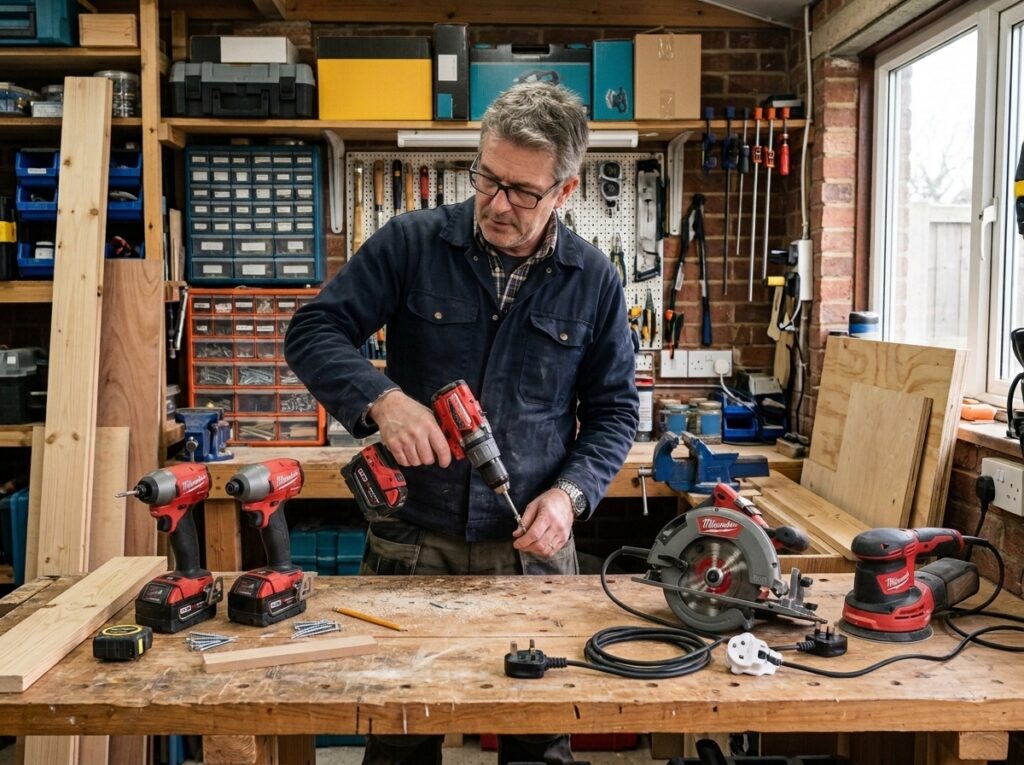
Yes.
You do not need to choose one type for your entire tool collection.
Many DIY users keep cordless drills, impact drivers, and multi-tools for quick jobs and portability.
They then use corded saws, grinders, sanders, or larger workshop equipment when they need continuous power.
Buying each tool based on the job it needs to perform can give you a more practical setup.
What Should You Check When Buying Used Power Tools?
Buying used tools can save you money, but condition matters.
For corded tools, check the cable, plug, casing, switches, guards, and general operation.
For cordless tools, check the battery terminals, charger, motor operation, and whether batteries hold a reasonable charge.
Always confirm exactly what is included before buying.
A low-priced cordless tool may be sold without a battery or charger.
Corded or Cordless: Which Should You Buy?
Choose cordless power tools if you want portability, quick setup, and the ability to use the same batteries across several compatible tools.
Choose corded power tools if you want continuous runtime, a lower initial purchase price, and mainly work close to a reliable electricity supply.
For many UK DIY users, a combination of both types makes the most sense.
Start with cordless tools for jobs where mobility matters. Consider corded tools for equipment that will spend most of its time in your workshop or handle long, demanding jobs.
Sell Your Unwanted Power Tools to SellToolsOnline
If you have corded or cordless power tools you no longer use, SellToolsOnline can help you turn them into cash.
We buy used power tools from customers across the UK.
Send us details and clear photos of your tools to receive a quote. If you accept our offer, we can arrange insured postage or collection, depending on the size and quantity of your tools.
Sell your unwanted power tools with SellToolsOnline and clear space for the equipment you actually use.